Ingredients
Method
- Prepare Your Station: Line two large baking trays with parchment paper. If you like, you can draw or print a simple Christmas tree template (about 5-6cm tall) and slide it under the parchment as a guide. In a food processor, blitz the ground almonds and icing sugar for about 30 seconds to get them extra fine, then sift the mixture into a large bowl, discarding any large almond pieces.
- Make the Almond Paste: Add the first portion of 55g egg whites to the almond/sugar mixture. Mix with a spatula until it forms a thick, stiff paste. Add a few drops of green gel food colouring and mix until the colour is evenly distributed. Set this bowl aside.
- Create the Sugar Syrup: In a small, heavy-bottomed saucepan, combine the caster sugar and water. Place it over a medium heat and stir gently just until the sugar has dissolved. Stop stirring, clip on a sugar thermometer, and let the syrup heat up until it reaches 118°C (245°F).
- Whip the Meringue: While the syrup is heating, place the second portion of 55g egg whites into the clean bowl of a stand mixer fitted with a whisk attachment. When the syrup reaches about 110°C, start whipping the egg whites on a medium-high speed until they form soft peaks.
- Combine for Italian Meringue: Once the syrup hits exactly 118°C, remove it from the heat. With the mixer running on a medium-low speed, carefully and slowly pour the hot syrup in a thin, steady stream down the side of the bowl, avoiding the whisk itself. Once all the syrup is added, increase the speed to high and whip for 8-10 minutes, or until the meringue is stiff, very glossy, and the outside of the bowl feels cool to the touch. This process is explained well in this guide to making meringue.
- The Macaronage: Add about a third of the glossy green meringue to the almond paste and beat it in vigorously with a spatula to loosen the paste. Then, gently fold in the remaining meringue in two additions. Fold by scraping around the edge of the bowl and turning the mixture over on itself. Stop when the batter flows from the spatula in a slow, continuous ribbon (often described as 'lava-like'). This is the most crucial step; under-mixing results in lumpy shells, while over-mixing leads to a runny batter that won't hold its shape.
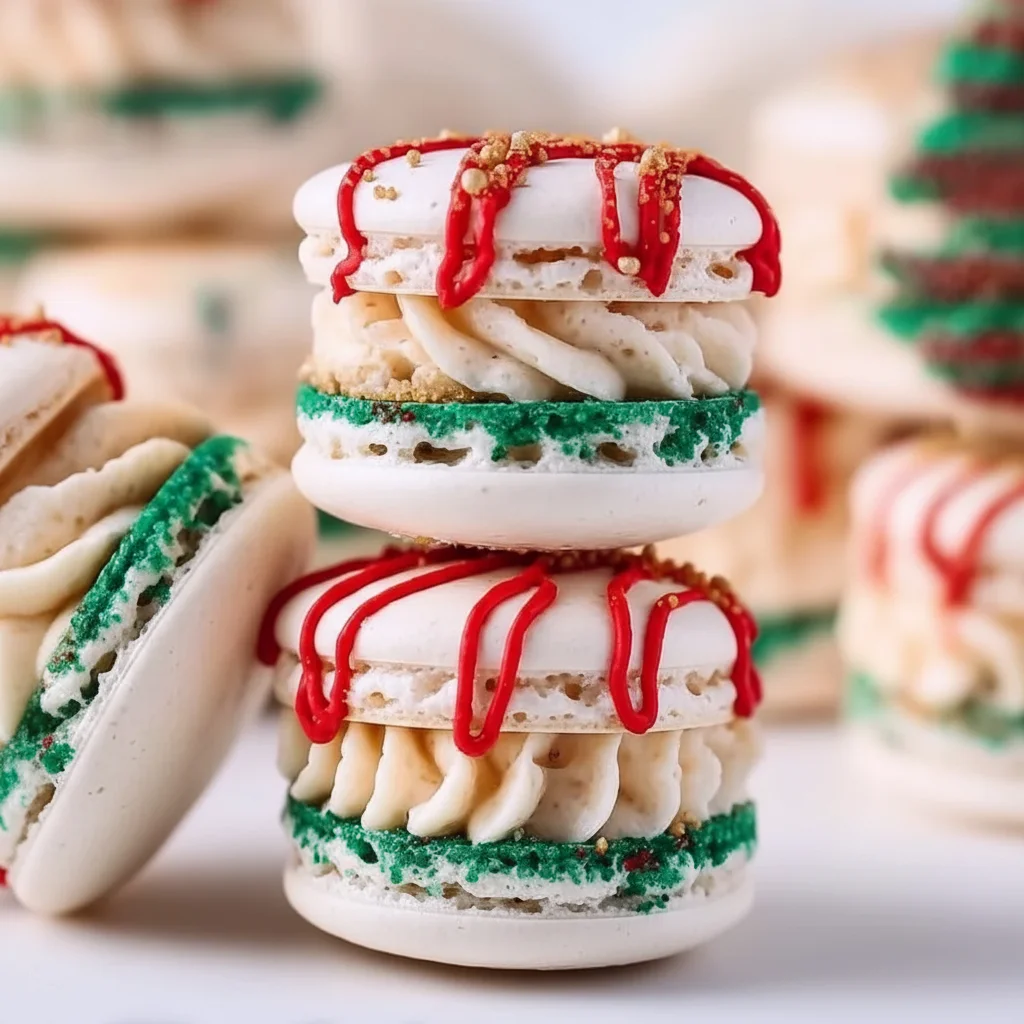
- Pipe the Trees: Transfer the batter to a piping bag fitted with a small round nozzle (about 8-10mm). Pipe the tree shapes onto your prepared trays, starting from the top and moving the piping bag from side to side in a zig-zag motion, getting wider as you move down. Finish with a small trunk. Immediately sprinkle your 'baubles' and add a star to the top of each tree.
- Rest and Bake: Firmly tap the baking trays on your work surface 5-6 times to release any trapped air bubbles. Leave the macarons to rest at room temperature for 30-60 minutes, until they form a 'skin'. You should be able to touch one gently without any batter sticking to your finger. Meanwhile, preheat your oven to 150°C (130°C fan). Bake for 16-18 minutes, rotating the trays halfway through. The macarons are done when the 'feet' are firm and they don't wobble when touched.
- Cool and Fill: Let the macaron shells cool completely on the baking trays before attempting to peel them from the parchment paper. While they cool, make the buttercream. In a large bowl, beat the softened butter until pale and creamy. Gradually add the sifted icing sugar, beating well after each addition. Add the vanilla bean paste and almond extract. If the frosting is too stiff, add milk one tablespoon at a time until you reach a smooth, pipeable consistency.
- Assemble Your Trees: Transfer the buttercream to a piping bag. Pair up your cooled macaron shells by size. Pipe a generous amount of buttercream onto the flat side of one shell and gently sandwich it with its partner. For a festive treat similar to this, you might also enjoy my recipe for Biscoff Truffles.
Notes
Store macarons in an airtight container in the refrigerator for up to 3 days. They are best enjoyed after 'maturing' for 24 hours, which allows the filling to soften the shells.